
HSE's AI Ruling: Why Your Risk Assessments Still Need to Be "Suitable and Sufficient" in 2026
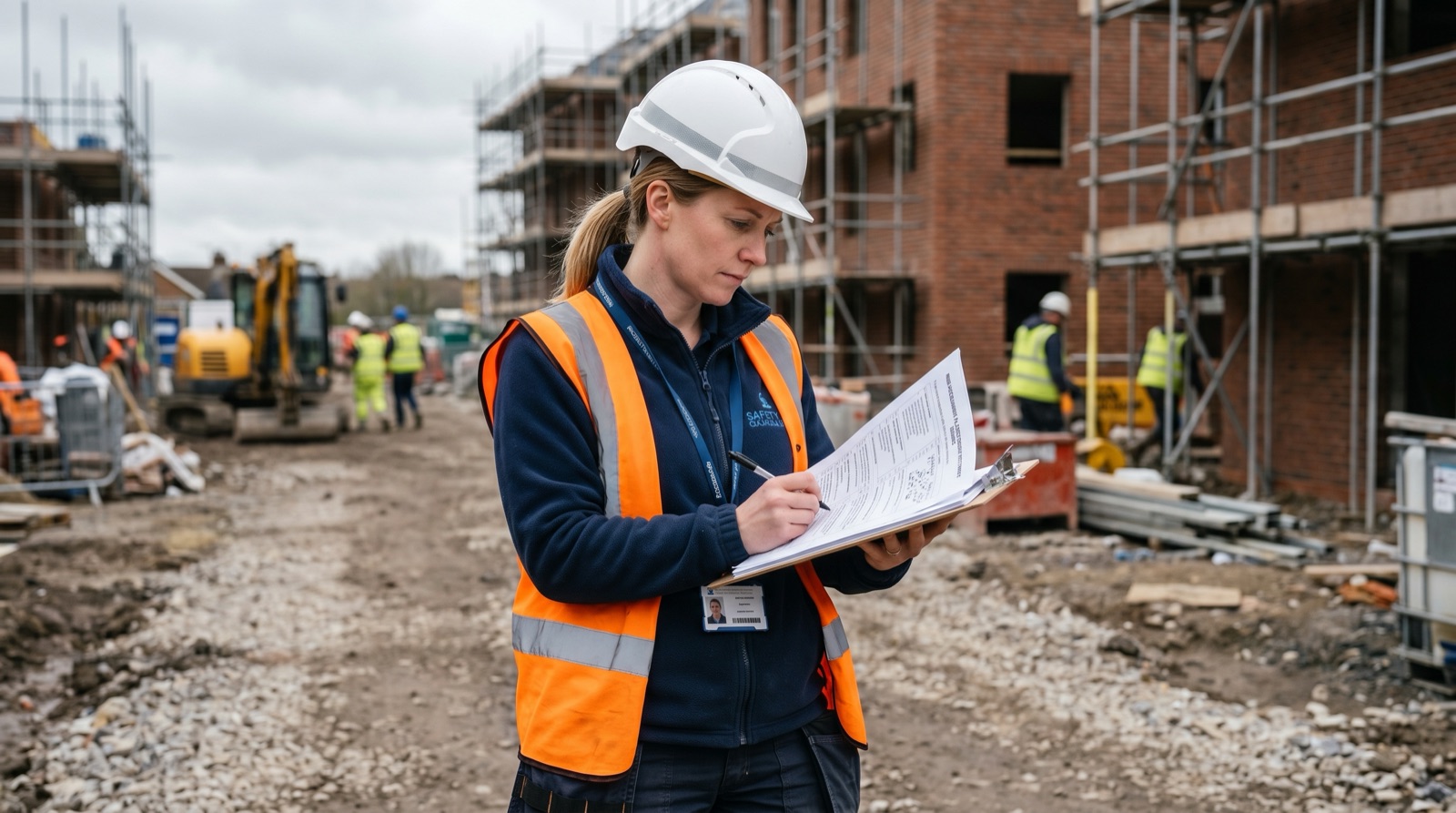
Let's get straight to it: AI tools are everywhere in 2026, and now in health and safety too. But using AI doesn't automatically make your documentation compliant, but it goes a long way.
The magic phrase? "Suitable and sufficient."
You've probably seen it in the Management of Health and Safety at Work Regulations 1999. It's been there for decades. But now, with AI tools flooding the market, HSE inspectors are asking sharper questions: Is this risk assessment actually tailored to your site? Or did you just hit "generate" and call it a day?
If you're a business owner or H&S manager wondering whether your shiny new AI tool passes the test, this one's for you.
What "Suitable and Sufficient" Actually Means (And Why Templates Fail)
Here's the thing. When an HSE inspector rocks up to your site, they're not checking if you have a risk assessment. They're checking if your risk assessment is fit for purpose.
"Suitable and sufficient" means:
- Suitable: It actually covers the hazards present on your site, for your activities, with your workforce.
- Sufficient: It's detailed enough to demonstrate you've thought things through and put controls in place.
A generic risk assessment template for "working at height" might mention scaffolding and harnesses. Great. But does it account for the fact that you're working on a Victorian building with crumbling brickwork in February? Or that your scaffolder is subcontracted and speaks limited English?
Probably not.
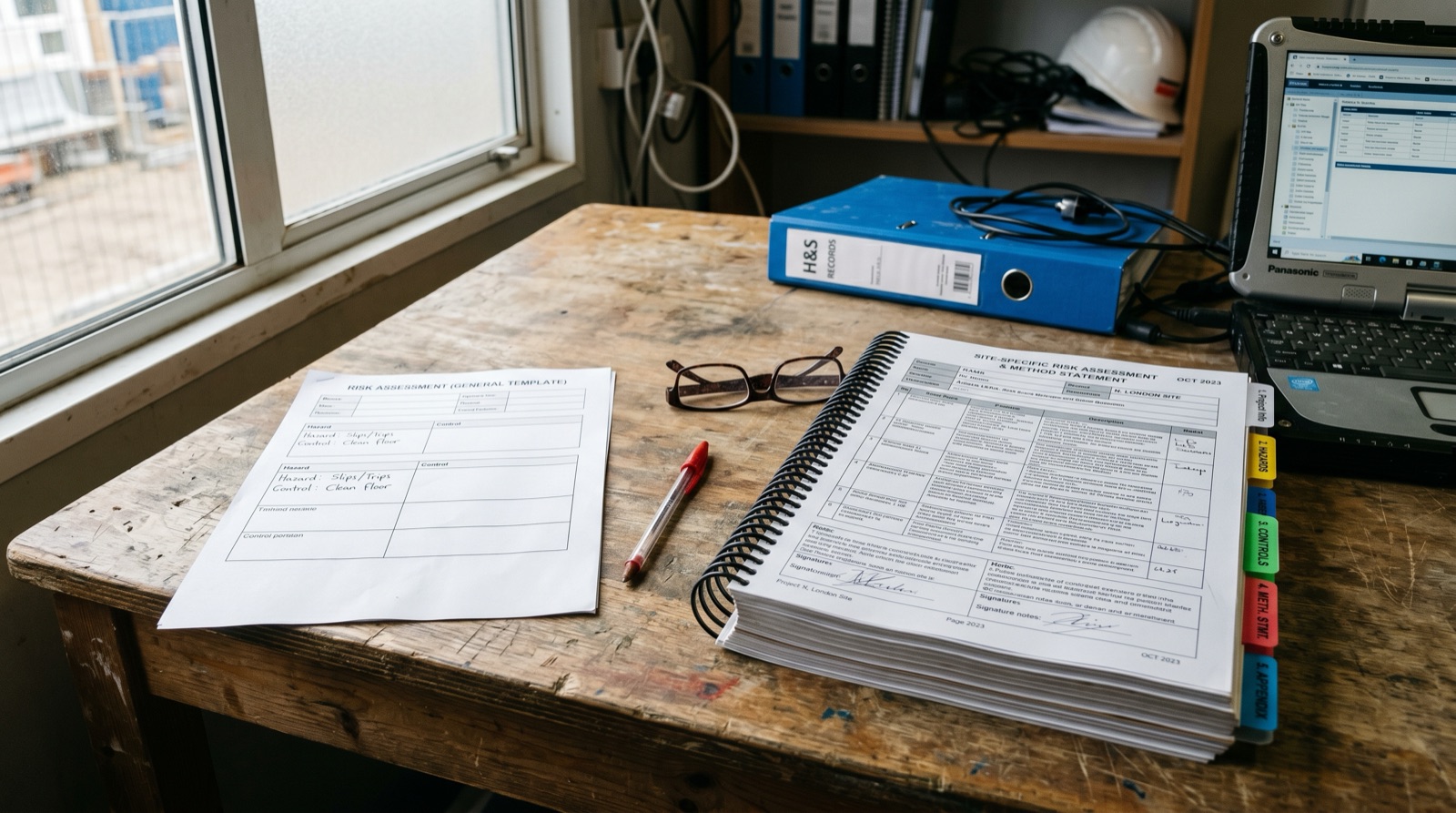
That's why risk assessment templates (the Word doc kind you download from Google) fall short. They're built for someone, but rarely for you. And inspectors can spot a copy-paste job from a mile away.
The AI Opportunity (And the Trap Door)
AI changes the game. Tools like AI RAMS can generate a construction risk assessment in minutes, not hours. You input the specifics, such as site location, activity type, and team size, and you get a tailored document.
But here's where it gets messy.
Not all AI is created equal. Some tools are glorified template machines. They shuffle the same generic sentences around and slap your company logo on top. Others, like AI RAMS, are trained on real-world H&S data, case law, and HSE guidance. They ask the right questions and generate assessments that reflect your specific risks.
The trap? Thinking AI absolves you of responsibility.
It doesn't.
Why You're Still Legally Responsible (Even If AI Wrote It)
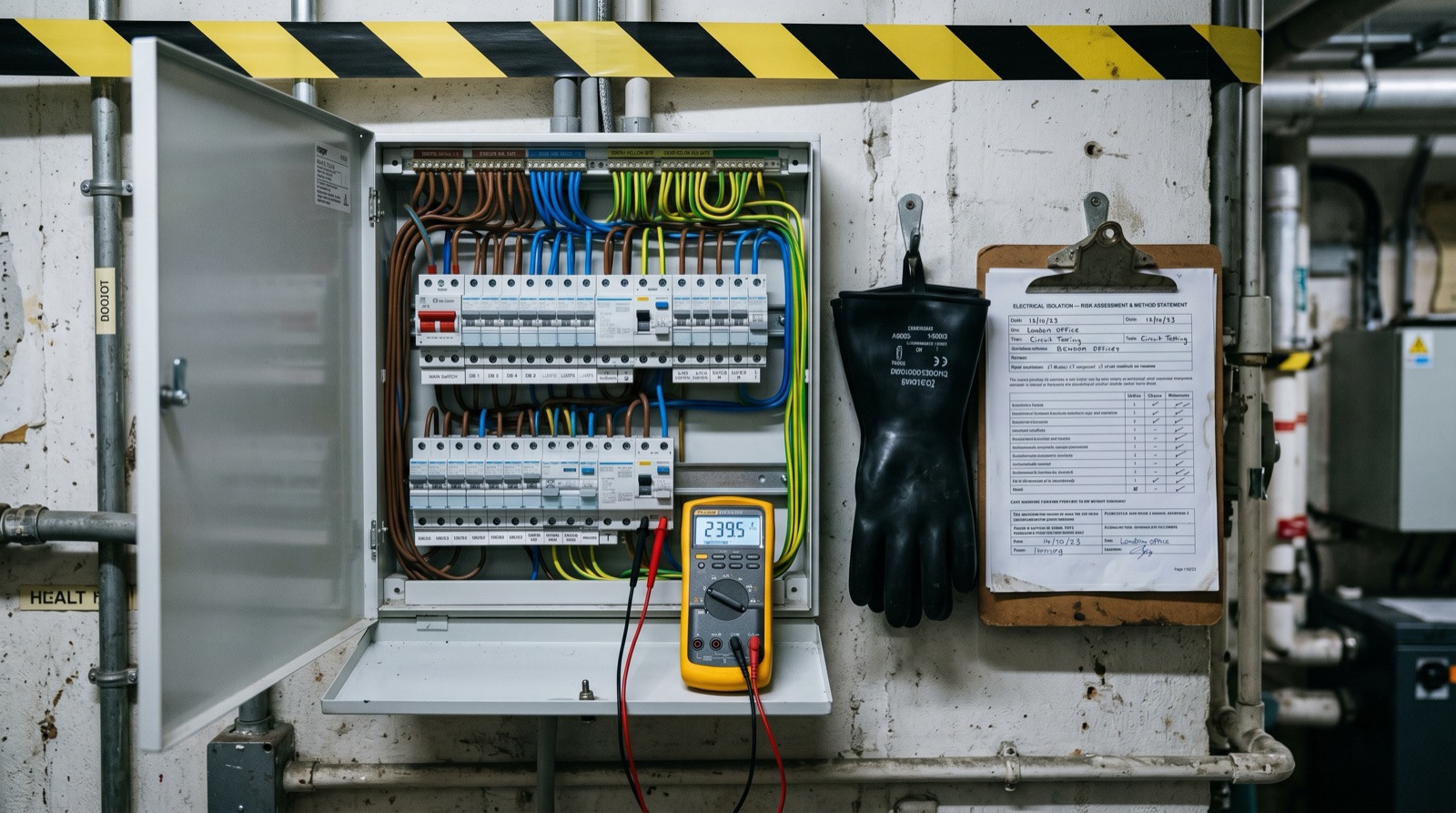
Let's say you use an AI tool to generate a RAMS template for electrical work. You hit "download," send it to your team, and crack on with the job. Two weeks later, an incident happens. Electrician gets a shock. HSE investigates.
Guess who's in the firing line? Not the AI. You.
Under the Health and Safety at Work Act 1974, the employer is responsible for ensuring risk assessments are suitable and sufficient. If your AI-generated document missed a key hazard, failed to identify adequate controls, or didn't reflect the actual working conditions, you're still liable.
This is why the quality of your AI tool matters. A cheap, generic AI that churns out cookie-cutter assessments is no better than a Word template. It's just faster at getting you in trouble.
What Inspectors Are Actually Looking For
When an HSE inspector reviews your risk assessments, they're checking for evidence that you've:
- Identified the real hazards. Not just the obvious ones. What about fatigue? Lone working? Interaction with the public?
- Assessed who might be harmed. Including contractors, visitors, vulnerable workers, and the public.
- Evaluated the risks. Not just "high/medium/low," but realistic consideration of likelihood and severity.
- Implemented controls. And explained how those controls are monitored and enforced.
- Reviewed and updated. When circumstances change, or after an incident.
A risk assessment example that ticks these boxes isn't just compliant, it's a defence. It shows you've taken reasonable steps to protect your people.
AI RAMS is built to help you hit every one of these points. It asks targeted questions about your site, your team, and your activities. Then it generates a document that reads like a professional H&S consultant wrote it, because it's trained on thousands of real-world risk assessments.
Speed vs. Compliance: Why You Shouldn't Have to Choose
Here's the frustration for most business owners. You want compliance, but you also need speed. A manual risk assessment can take 2-3 hours per activity. Multiply that across multiple sites, jobs, or subcontractors, and you're burning days every month.
That's where AI RAMS bridges the gap.
You input the job details. Let's say you're doing a construction risk assessment for groundworks on a residential site. AI RAMS asks about machinery, ground conditions, proximity to utilities, weather considerations, and workforce competence. In under 10 minutes, you've got a detailed, site-specific RAMS document that covers:
- Hazard identification (excavation collapse, underground services, manual handling)
- Who's at risk (groundworkers, site visitors, neighbouring properties)
- Control measures (shoring, CAT scanning, welfare facilities)
- Emergency procedures
- Review triggers
Is it faster than a template? Yes. Is it compliant? Absolutely, because it's tailored to your actual conditions.
Real-World Example: Where Generic Templates Go Wrong
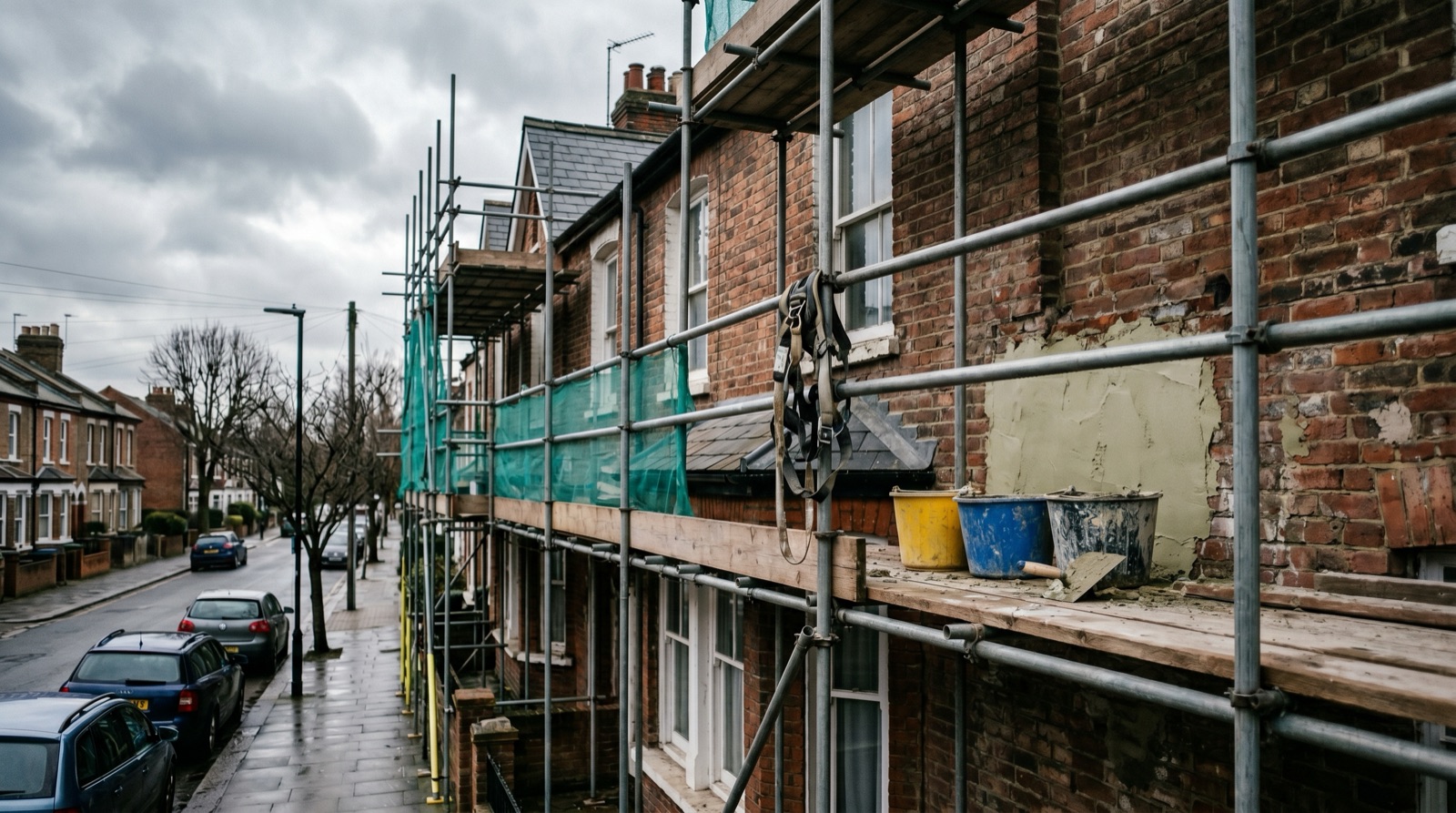
Let's take a typical scenario. You're a small contractor doing external rendering on a three-storey residential building. You download a free "working at height" RAMS template online. It mentions scaffolding, PPE, and toolbox talks. You fill in your company name and date. Done.
But here's what it doesn't cover:
- The scaffolding is erected on uneven ground (stability risk)
- You're working next to a busy road (public interaction, vehicle movement)
- The building has asbestos soffits (exposure risk during fixing)
- Your workforce includes a 19-year-old apprentice (young worker considerations)
An HSE inspector reviewing this after an incident would tear it apart. It's not suitable because it doesn't reflect the site. It's not sufficient because it hasn't considered the full range of hazards.
AI RAMS wouldn't let you off the hook that easily. It prompts you to consider ground conditions, adjacent hazards, material risks, and workforce competence. The output is a construction risk assessment that actually protects you and your workers.
Why AI RAMS is Different
We're not here to sell you snake oil. There are plenty of AI tools out there that promise compliance and deliver mediocrity. AI RAMS is different because it's built for H&S, by people who understand what inspectors look for.
Here's how it works:
- You select your activity type (e.g., manual handling, hot works, confined space entry)
- You answer questions about the specifics (location, workforce, environment, equipment)
- AI RAMS generates a tailored risk assessment that's detailed, readable, and defensible
- You review it, add any site-specific notes, and download
It's not a shortcut. It's a smarter way to work.
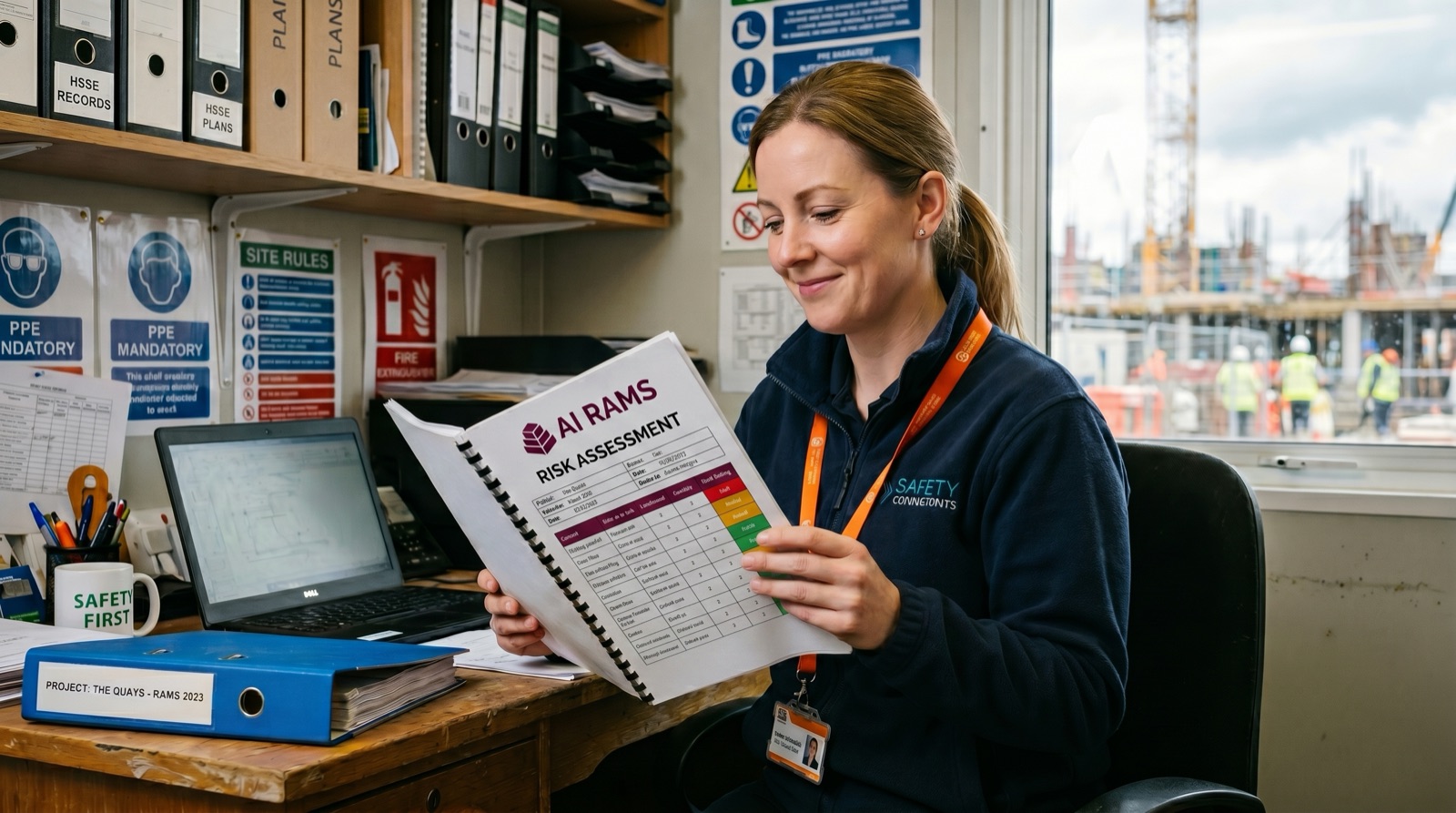
And because the legal responsibility still sits with you, it's designed to make you think, not just click and forget. So every time you create a RAMS with whatever tool, make sure you study it and evaluate it yourself before sending it off.
The Bottom Line
AI is a tool. A powerful one. But it doesn't replace your duty of care, and it won't keep you out of court if you use it carelessly.
The HSE's position in 2026 is clear: use AI if you want, but your risk assessments still need to be suitable and sufficient. That means site-specific, thought-through, and fit for purpose.
If you're still relying on dusty risk assessment templates or generic RAMS documents, it's time for an upgrade. And if you're already using AI, make sure it's the kind that asks tough questions, not just the kind that spits out pretty PDFs.
Want to see the difference? Try AI RAMS for free and generate a risk assessment in under 10 minutes. No credit card required. No shortcuts. Just smart, compliant documentation that stands up to scrutiny.
Because when it comes to health and safety, "good enough" isn't good enough.
Ready to try AI-powered RAMS?
Generate your first professional risk assessment in under 5 minutes. No credit card required.
Get Started Free