
Risk Assessment Template, AI Tool or Consultant?
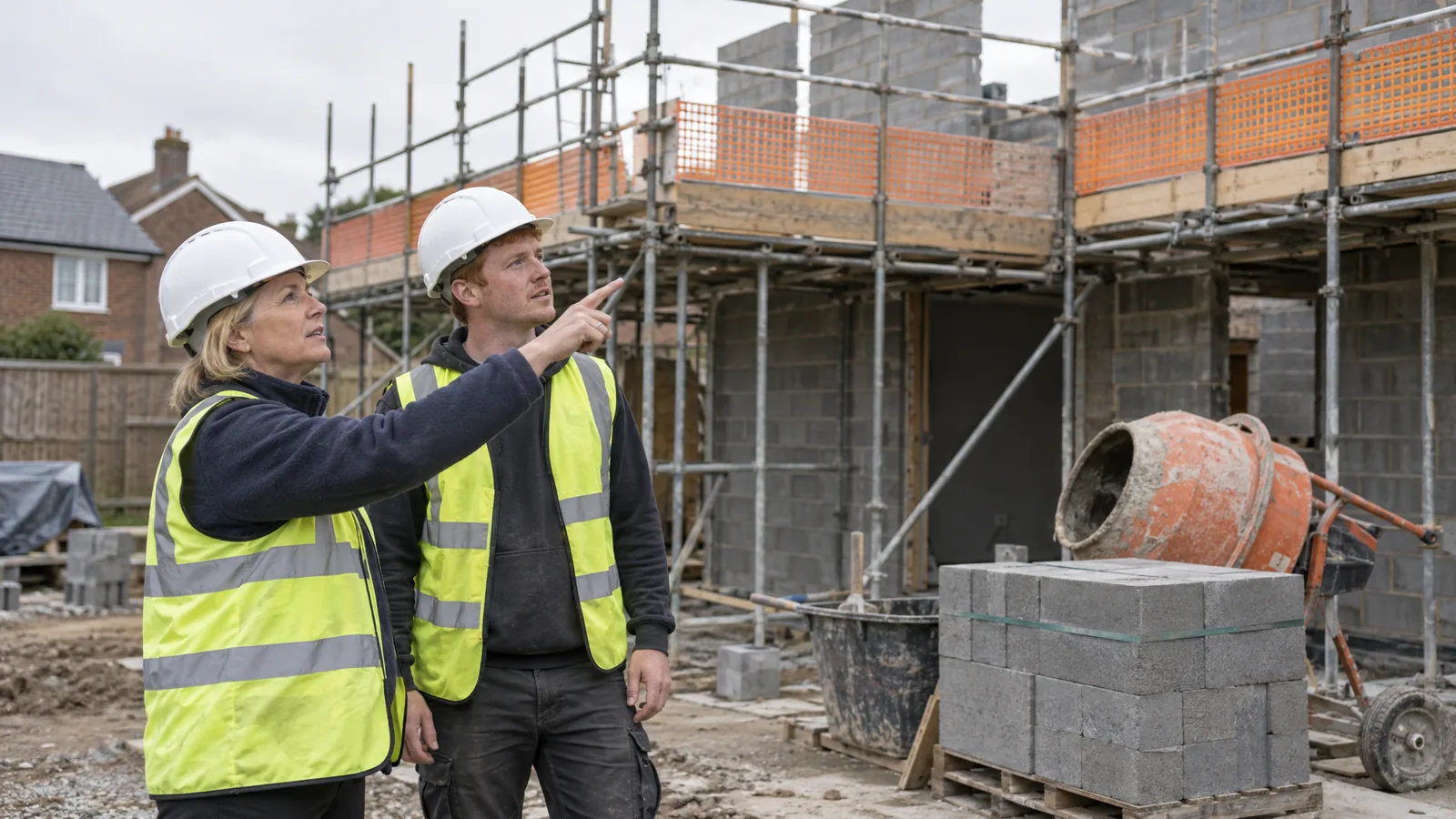
A free risk assessment template is often enough for simple, low-risk work you repeat and keep up to date. An AI drafting tool suits varied jobs whose hazards you can judge yourself, and a consultant is worth paying for when the work is high risk, complex or new to you.
RAMS means a risk assessment and, usually, a method statement, and clients and principal contractors often ask small firms and sole traders for them. Whichever route you take, the risk assessment stays your responsibility, and you check the document against the real job before work starts.
We make AI RAMS, one of the drafting tools this page compares, so we have a stake in your choice. We have tried to be plain about where it fits, where it does not, and when a free template or a consultant is the better call.
| Route | Cost | What it still needs from you |
|---|---|---|
| Free risk assessment template | Free, apart from your time | All the thinking: it cannot ask you anything, so you adapt it to each job and keep it up to date |
| AI drafting tool, such as AI RAMS (ours) | Tools differ. In AI RAMS, creating, previewing and editing are free; you pay once per document to download it, or take Pro for unlimited downloads | Accurate answers about the job, and a careful check of the draft against it |
| Health and safety consultant | You pay for their time, so prices vary | Accurate details of the job, a check that they are competent, and a read of what they write |
The legal duty is the same on every route
The legal duty is the risk assessment. Regulation 3 of the Management of Health and Safety at Work Regulations 1999 requires a suitable and sufficient assessment of the risks, and it extends that to self-employed people working in construction or whose work could put other people at risk.
A method statement is usually not required by law by that name, although clients and principal contractors often ask for one. Our guide to whether you need a method statement for a small job explains the exceptions.
None of the three routes changes any of this. HSE's guidance on managing risk also says not to rely purely on paperwork: the priority is controlling the risks in practice. The route to pick is the one that gets you an accurate document for this job, one you will actually follow.
Route 1: a free risk assessment template
Free templates are easy to find and perfectly legitimate. HSE publishes its own risk assessment template and examples, a simple record of who might be harmed, what you already do about it and what else needs doing. For the other documents, our guides include a free method statement template and a free COSHH assessment template.
What a template cannot do is ask you anything. It holds whatever you put into it and nothing more, so the thinking is all yours. HSE's template page is blunt about the shortcut: "Do not just copy an example and put your company name to it". It says that would not satisfy the law.
- Cost: free, apart from your time.
- Best for: simple, low-risk work you do often, where you know the hazards well and keep the template up to date.
- Watch for: hazards left over from the last job, hazards missing for this one, old names and dates, and no point set for reviewing it.
If you already have a template, our guide to adapting a risk assessment template shows how to make it fit a new job.
Route 2: an AI drafting tool
A drafting tool starts from your description of the job instead of a blank form. Tools differ. In AI RAMS, our own tool, you describe the job in a chat, answer its follow-up questions, and it drafts the document. You see a watermarked preview, edit the draft in the editor, then download it as a PDF or a Word file.
- Cost (AI RAMS): creating, previewing and editing are free, with no card needed to start. You pay once per document, which unlocks its PDF and Word downloads, including after later edits, or take Pro for unlimited downloads.
- Best for: jobs that vary from one week to the next, when you can judge the hazards yourself but would rather answer questions than start from a blank page.
- Watch for: anything in the draft that does not match your job, such as a hazard that is not there, a detail you never gave it, or a control you will not actually use.
A few details matter when you compare it with the other routes:
- One chat per document. AI RAMS makes risk assessments, method statements and COSHH assessments, and each has its own chat. One description does not produce a full RAMS pack.
- Nothing keeps them in step. A new chat can start from a document you made for the same job, but once you edit them, nothing keeps the risk assessment and the method statement in step. Read them side by side before you send them.
- Extras. You can put your logo on your documents, the risk assessment chat asks whether you want a risk matrix, and the COSHH chat can read a photo of a product label or a safety data sheet.
- No construction phase plans. It does not write them. If you are the only contractor on a construction job, you need one, which you draw up or have drawn up separately. Our guide to small jobs explains when a construction phase plan is needed.
The draft arrives in minutes. Checking it is the part not to rush. HSE's statement on its approach to AI says most of the health and safety law it enforces is goal-setting, so it applies "regardless of the technology being used". The statement is about how HSE regulates AI used at work; it does not deal with AI-drafted documents as such. The duty in regulation 3 is yours whichever way the document is drafted: a tool helps you write it, but it does not take on that duty.
For what to look for, see our guide to checking an AI-drafted risk assessment. To see the method statement chat from start to finish, read our step-by-step guide to making a method statement in AI RAMS.
Route 3: a health and safety consultant
A competent consultant brings what neither a template nor a tool can: judgement about your work and, if you arrange it, a visit to see it. That is worth paying for when the job goes beyond what you know.
HSE's page on appointing a competent person says that managing health and safety usually is not complicated, and that you can often do it yourself with help from your workers. It points to a consultant or adviser when a business does not have the competence in-house, for example because it is large, complex or high risk. It also makes clear that bringing one in does not move the duty: as the employer, managing health and safety is still yours.
- Cost: you pay for their time, so prices vary. Ask what is included, such as a site visit, revisions and a review when the job changes, and how soon they can turn it round.
- Best for: high-risk or complex work, work you have not done before, or times when you are not confident you could tell whether a document is right.
- Watch for: a generic document that does not reflect how you actually work. A consultant still needs accurate details of the job from you, and you still need to read what they write.
If you use one, HSE says to make sure they are competent and suitable, and it points to the Occupational Safety and Health Consultants Register (OSHCR) as one way to find a consultant.
Every route ends with the same check
Template, tool or consultant, the document only does its job if it fits the work in front of you. Before you send it or start work, read it with the job in mind:
- Does it describe this job, this site and the people who could be affected, including anyone else nearby?
- Are the controls ones you will actually use on the day?
- If you have a method statement too, does it match the risk assessment?
- Is it dated, with a clear point for review, such as a change to the job, the site or the people?
If any answer is no, fix the document before work starts.
If you suspect asbestos, stop. Whichever route you chose, get it checked before any drilling or cutting.
How to choose: template, AI tool or consultant
Start with the job, not the tool, and stop at the first yes:
- Is the work high risk, complex or new to you, or are you unsure you could judge whether a document is right? Get help from a competent person, whether that is someone in your team or a consultant.
- Is it simple, low-risk work you do often? Use a template and keep it up to date. HSE's free one is a good starting point for the risk assessment, and our guides have free method statement and COSHH templates.
- None of the above? If you already have a template that fits most of your jobs, adapt it for this one. If you would rather answer questions about the job than fill in blank boxes, try a drafting tool.
Whichever step you stopped at, finish by running the check above on the document before you send it or start work.
You can also mix routes: a template for your routine jobs, a drafting tool for jobs that vary, and a consultant for anything high risk or new to you.
If you want to see what a drafting tool asks before you decide, describe your next job in AI RAMS. Creating, previewing and editing are free and no card is needed; you pay only for a document you download. If a template already works well for your jobs, there is no need to switch.
Frequently asked questions
Is a free risk assessment template good enough?
Often, for simple, low-risk work you do regularly, as long as you adapt it to each job and keep it up to date. HSE publishes a free risk assessment template and examples, but warns that copying an example and putting your company name to it would not satisfy the law. A template cannot ask you anything, so the thinking is all yours.
Can an AI tool write my RAMS?
It can draft the documents from your answers about the job, in minutes, but it does not take on your legal duty. You check each draft against the real job and you own it. In AI RAMS, our own tool, each document has its own chat, so one description does not produce a full RAMS pack, and it does not write construction phase plans.
Do I need a consultant to write my RAMS?
Not usually. HSE says managing health and safety usually is not complicated and that you can often do it yourself with help from your workers. A competent consultant is worth paying for when the work is high risk, complex or new to you, or when you could not tell whether a document is right. Bringing one in does not move your duty.
How much does each route cost?
A template is free, apart from your time. A consultant charges for their time, so prices vary. Drafting tools differ: in AI RAMS, our own tool, creating, previewing and editing are free and no card is needed to start. You pay once per document, which unlocks its PDF and Word downloads, including after later edits, or take Pro for unlimited downloads.
What is the best way for a sole trader to write RAMS?
Start with the job, not the tool. Get help from a competent person if the work is high risk, complex or new to you, or if you are unsure you could judge a document. Use a template you keep up to date for simple, low-risk work you do often. Otherwise, adapt a template or use a drafting tool, then check the document against the real job before work starts.
By Filip Perkon, Director, AI RAMS. Legal points last checked on 5 October 2026 against HSE guidance and legislation.gov.uk. This is general information, not legal advice.
Ready to try AI-powered RAMS?
Create, preview and edit documents free, with no card needed. Pay only when you download.
Start free