
Site Specific RAMS and Risk Assessments: What to Include
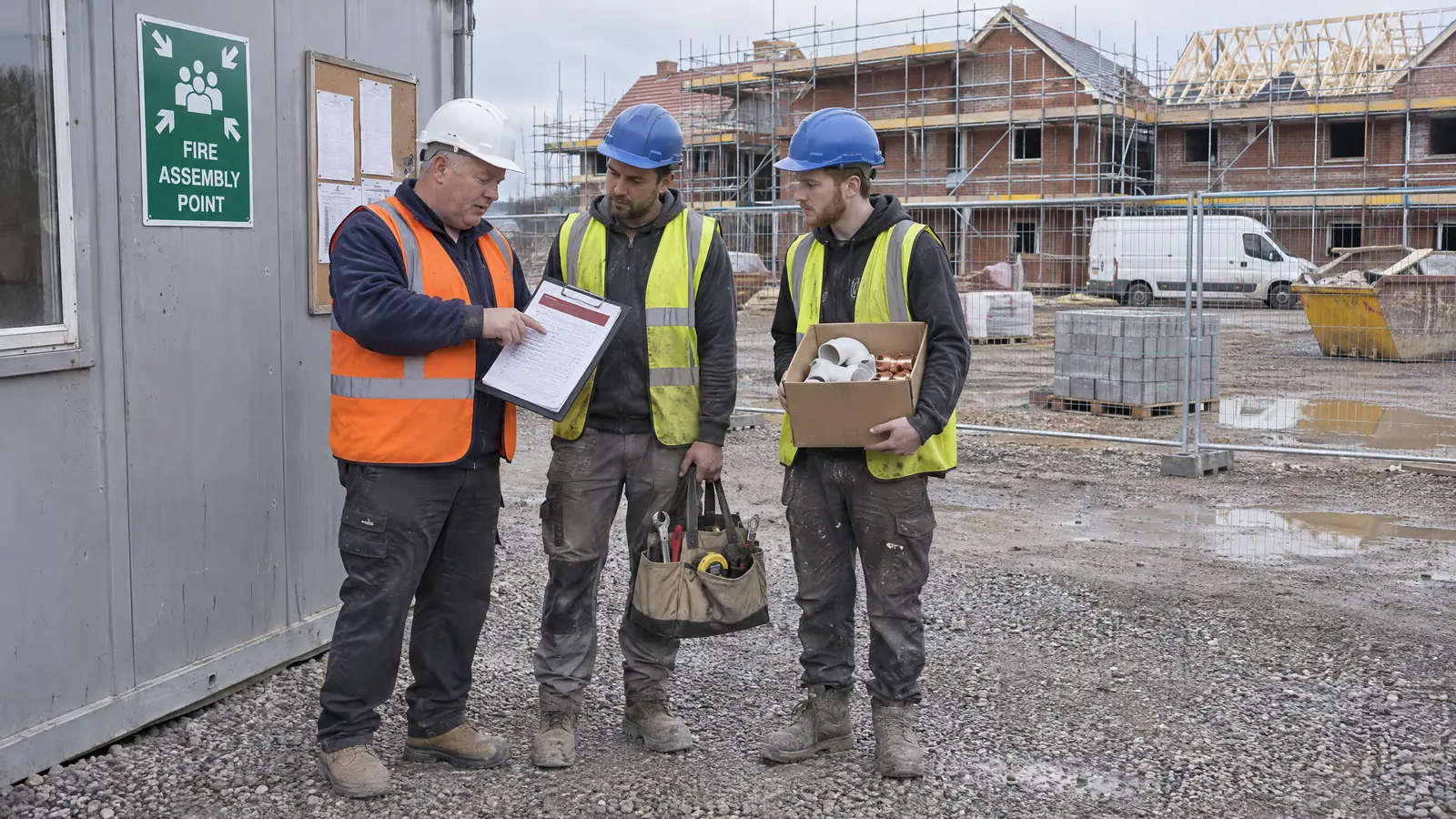
A site specific RAMS is a risk assessment and method statement written for one job at one address. It covers the hazards of the task and the hazards of the place: who else is there, how you get in, what is in the walls and the ground, the site's own rules, and what happens in an emergency, down to the first aider, the assembly point and the nearest A&E. A generic RAMS describes the work. A site specific one also describes where the work happens.
The law does not use the phrase, but the duties behind it are real. Regulation 3 of the Management of Health and Safety at Work Regulations 1999 requires a "suitable and sufficient" assessment of the risks to your workers and to other people your work affects, and HSE's guidance for contractors says to "make sure that all workers under their control have a suitable, site-specific induction".
This page is for tradespeople and small contractors in Great Britain who have been asked for a site specific risk assessment, or a site specific method statement, by a principal contractor, main contractor, client or facilities manager. It explains what makes a document site specific, where to find the details, and how to reuse your last RAMS without carrying the last site into the next one.
If you need a blank document to start from, use the free RAMS template or the free risk assessment template. For the sections every method statement needs, see our guide on how to write a method statement. This guide is about the part no template can fill in for you: the site.
Generic or site specific: what is the difference?
A generic risk assessment covers a task wherever it happens: soldering pipework, cutting blocks, working from a stepladder. Its hazards and controls come with the job. A site specific risk assessment starts from the same task and adds what is true only at this address, on these dates, with these people.
Both have a place. HSE's guidance on construction paperwork says that where an operation is repeated, "the statement will be similar from job to job", and that if circumstances change markedly, "the statement should be revised for each job". HSE's example risk assessments come with a warning: "Do not just copy an example and put your company name to it". It says you "must think about the specific hazards and controls your business needs."
| Part | Generic: comes with the task | Site specific: comes with the place |
|---|---|---|
| Hazards | The tools, materials and method | What is already there: other trades, occupants, traffic, asbestos, services, ground conditions |
| Who could be harmed | You and your crew | Everyone nearby: other trades, the client's staff, residents, visitors, the public |
| Access | How you reach the work: steps, a tower, a platform | How you get onto the site, where you park and unload, and which routes you may use |
| Rules | Your own company procedures | The principal contractor's site rules, induction, permits and working hours |
| Emergencies | General first aid and fire precautions | The named first aider, the assembly point, the address with postcode and the nearest A&E |
| Sign-off | Who wrote it | Who will do the work on these dates, and who briefed them |
Why principal contractors want it site specific
A principal contractor runs a site with many trades on it, and has to fit your work in with theirs. Your RAMS is where they check that you know how this site works. Several duties point the same way.
- Your own risk assessment. Regulation 3 of the Management of Health and Safety at Work Regulations 1999 covers the risks to your employees and to "persons not in his employment". It must be reviewed if "there is reason to suspect that it is no longer valid" or "there has been a significant change in the matters to which it relates". If you employ five or more people, the significant findings must be recorded.
- Shared sites. Regulation 11 of the same regulations says employers who share a workplace must co-operate, co-ordinate their measures, and "take all reasonable steps to inform the other employers concerned of the risks to their employees' health and safety".
- The principal contractor's directions. Under regulation 15 of the Construction (Design and Management) Regulations 2015, where there is more than one contractor, a contractor must comply with "any directions given by the principal designer or the principal contractor" and with "the parts of the construction phase plan that are relevant to that contractor's work on the project". Regulation 12 says the construction phase plan "must set out the health and safety arrangements and site rules".
- What your workers are told. Regulation 15 also says the information a contractor gives its workers must include "a suitable site induction, where not already provided by the principal contractor", "the procedures to be followed in the event of serious and imminent danger to health and safety", and information on risks "arising out of the conduct of another contractor's undertaking".
- Emergencies. Regulation 30 requires "suitable and sufficient arrangements for dealing with any foreseeable emergency", including "procedures for any necessary evacuation of the site or any part of it".
None of this needs a document with that name. But a RAMS that names the site rules, the other trades, the induction and the evacuation arrangements shows a reviewer you have taken them in, and one that does not gives them an obvious reason to send it back.
On a small job with no principal contractor, the duties to assess the risks and plan the work still apply, and HSE says the only contractor on a project "must ensure a construction phase plan is drawn up before setting up the site". Our guide on whether you need a method statement for a small job covers when paperwork is needed at all.
What goes in a site specific RAMS
Most of the site detail belongs on the front page of the risk assessment, in its risk lines, and in the first and last steps of the method statement. Work through these groups for every job.
The site and the job
- The full site address, with its postcode. The reviewer needs it, and so would an ambulance crew.
- The dates of work and the working hours, including any hours the site or the client restricts.
- The client and, where there is one, the principal contractor, with a site contact and a phone number.
- Exactly where you will work: which rooms, floors, plots or areas.
Access and the people around the work
- How you get onto the site, where you park, unload and store materials, and the routes you use.
- Who else is there: other trades, the client's staff, residents, patients, pupils, visitors, the public. Name the groups, not "others".
- How the work area is kept apart from them: barriers, signs, a locked room, or working out of hours.
What the site already holds
- Asbestos. What the client's asbestos information says about the areas you will disturb. HSE's advice is: "If the building was built or refurbished before 2000, assume that there is asbestos in it." If an older building has no asbestos information, ask the client to arrange a survey before you disturb anything.
- Services. Live cables and pipes in the walls, floors and ceilings you will work on, and overhead or underground services outside.
- Anything unusual. Fragile roofs, confined spaces, poor ground, contamination. HSE's planning guidance lists "asbestos or other contaminants", "overhead power lines and underground services" and "unusual ground conditions", and says "Much of this information may be found in the pre-construction information provided by the client".
The site's rules
- The induction: when, where and who gives it.
- The site rules from the construction phase plan that touch your work: permits for hot work, roof access or isolation, PPE beyond the basics, plant, deliveries, smoking and phones.
- Welfare: whose toilets, washing and rest facilities you will use. HSE says contractors must "ensure suitable welfare facilities are provided from the start for workers under their control".
Emergencies
- The named first aider or appointed person, and where the first aid kit is. HSE's first aid guidance asks you to consider "how close your sites are to emergency medical services" and "whether your employees work on shared or multi-occupancy sites".
- The nearest A&E, by name and address, looked up from the site's postcode. Check it is a full emergency department, not a minor injuries unit.
- The fire alarm and the assembly point: how the alarm sounds, where you go and who you report to.
- What happens if someone is hurt: who calls for help, who meets the ambulance, and which entrance it should use.
People and sign-off
- The people doing the work, by name, and who supervises them.
- Who wrote the RAMS, the date, and a space for each person briefed to sign.
Where to find the site details
You cannot write a site specific document from the office alone. The details usually come from four places.
- The pre-construction information: what the client has to pass on to contractors about the site and the building, often put together by the principal designer. It should cover things like asbestos, services, ground conditions and the existing structure.
- The principal contractor's construction phase plan and site rules, and the induction. Ask for the parts that apply to your work before you write, not on the morning you start.
- A site visit, or a call with the client if a visit is not possible. Walk the route from the gate to the work area, and look at where the other trades and the public will be.
- The client or building manager, for occupants, opening hours, keys, alarms and any rooms that must stay in use.
Where something is not yet known, say what is outstanding and who will confirm it before work starts. Do not leave a blank or a placeholder for the reviewer to find.
Generic wording a reviewer will query
Some lines could sit in any RAMS for any site, so they tell a reviewer nothing they can check. Replace them with what applies on this job.
| Generic | Site specific |
|---|---|
| Appropriate PPE to be worn | Hard hat, hi-vis, safety boots and gloves on site at all times; on-tool extraction and an FFP3 mask, face fit tested, when cutting blocks |
| Barriers as required | Barriers and signs at the door of each room being worked in, up before work starts and down at the end of each day, with corridors and escape routes kept clear |
| Take care near other trades | Electricians are working on the same floor; agree with their supervisor each morning which rooms each trade uses |
| First aid kit available | First aider: named; first aid kit in the van and the site office; nearest A&E: named, with its address |
| Follow site rules | Hot work permit from the site manager before any soldering; deliveries booked 24 hours ahead; no work after 5pm |
| Comply with all relevant legislation | Name the regulation where it changes what you do, or leave the line out |
Placeholders are the other giveaway: "TBC", "[site name]", "XXX", or a name and date left blank in the sign-off. Fill them in or say who will confirm them and when.
Reusing a RAMS for the next job
Reusing your own RAMS is sensible when the work really is the same. Keep the task parts: the hazards and controls of the method, the sequence of the work, and the COSHH details for the same products (see our guide on how to write a COSHH assessment).
Rewrite everything in the site list above. Then clear what belonged to the last job: the dates, the reference, the briefing signatures and any actions ticked off there.
The last site hides in places you do not look at when you skim. Before you send the new version:
- search the document for the old address, postcode, client name and hospital
- read the first and last method steps, which often say where to report and where to sign off
- read the emergency procedure line by line, because an old assembly point or A&E there is the error that matters most
If you arrive and the site is not what you planned for, stop and update the RAMS before starting. Regulation 3 requires a review when an assessment may no longer be valid. Tell the principal contractor or client and brief the crew on the change.
Worked example (fictional): the same plumbing job on two sites
This example is made up to show the level of detail to aim for. It is not a template to copy.
The job: a two-person plumbing and heating firm installs new radiators and copper pipework, with some soldered joints. The task parts are the same on both sites: carrying radiators, soldering, stepladders, hand tools, and flux and solder, which go in the COSHH assessment. Site A is a plot on a new-build housing site run by a principal contractor. Site B is a ground floor dental practice in a 1960s building that stays open during the work. The practice owner is the client and the firm is the only contractor.
| Site detail | Site A: new-build housing site | Site B: occupied dental practice |
|---|---|---|
| Who sets the rules | The principal contractor: induction on the first morning, site rules from the construction phase plan | The firm, agreed with the practice manager; as the only contractor, the firm draws up the construction phase plan |
| Who else is there | Other trades on the same and nearby plots; site vehicles and plant | Practice staff, patients and visitors, including children and older people |
| Access | Sign in at the site office; park in the compound; deliveries booked with the site manager | Materials in through the rear door before opening; nothing left in corridors or the waiting room |
| Working hours | Site hours set by the principal contractor | Treatment rooms only while they are closed; noisy work before opening or after closing |
| What the site holds | New build, so no asbestos in the building; temporary site electrics | Built in the 1960s: the client's asbestos information is checked before lifting floorboards or drilling; live water, gas and electrics |
| Hot work | Hot work permit from the site manager before soldering | Press fittings in the treatment rooms; soldering only in an empty room, with the practice's agreement and a fire check afterwards |
| First aid | The site's first aiders, plus the firm's own kit in the van | The firm's own first aider and kit |
| Emergencies | Site assembly point by the site office; the site's alarm | The practice's fire alarm; assembly point in the rear car park |
| Nearest A&E | Named, with its address, looked up from the site postcode | Named, with its address, looked up from the practice postcode |
| Welfare | The principal contractor's welfare cabins | The practice's staff toilet and kitchen, by agreement |
First and last method steps for site B (fictional example):
- Arrive at 7am, before the practice opens, and sign the practice's contractor book.
- Check the client's asbestos information for the rooms in today's work. If anything suspect turns up that it does not cover, stop and tell the practice manager.
- Agree with the practice manager which rooms are closed today, and put up barriers and signs at the door of each one.
- Bring materials in through the rear door and store them in the closed room, not the corridor.
- Install the radiators and pipework as on any job, following the task steps.
- Before the practice opens, clear tools and offcuts from shared areas and check that no barrier blocks an escape route.
- At the end of the day, record which rooms are finished, take down the barriers, and tell the practice manager what is still isolated, if anything.
For soldering on either site, our guide to hot works RAMS covers the permit, the fire watch and what to put in the method steps.
Site checks before you send it
- Is the full address, with its postcode, on the front page?
- Are the dates, working hours, client and any principal contractor named?
- Does it name who else will be on site, and how they are kept away from the work?
- Does it say what the asbestos information and the services checks found for the areas you will work in?
- Does it include the induction, site rules and permits that apply to your work?
- Are the first aider, the assembly point and the nearest A&E named for this site?
- Has every placeholder, and every trace of the last job, gone?
- Are the people doing the work named, with a date and space for briefing signatures?
Where AI RAMS fits, and what it does not do
AI RAMS is our own product, so its limits come first:
- It cannot visit the site. It knows only what you tell it, so the address, the people around the work, the rules and the emergency arrangements come from you, the client and the principal contractor.
- It makes three documents, each in its own chat: risk assessments, method statements and COSHH assessments. It does not write construction phase plans, inductions or permits.
- Its check is a list, not a review, and it cannot tell you whether a principal contractor will accept a document.
What it does for site specific work: the chats ask about the site as well as the task, such as the emergency arrangements, permits and sign-in, welfare, and who else is around. Before a risk assessment or method statement downloads, a check looks for the site details a reviewer looks for (the address and postcode, the nearest A&E, a named first aider, the assembly point, the client or principal contractor, and the site rules), for placeholder and generic wording, and for blank sign-off fields, and takes you to each one to fix.
For the next job, Make a copy starts from the document you made for the last one. It asks for the new site address, the dates of work and the nearest A&E before the copy exists, and clears the old sign-off date, reference and ticked actions. The method statement chat can also pick up the details of a risk assessment you made for the same job in the last week. To brief the crew, the toolbox talk generator writes a short talk with an attendance register to sign.
Every site needs its own documents, so if you work on many sites, document packs buy them up front: 10 for £75, 100 for £500 or 1,000 for £3,000. Each credit unlocks one document with a clean PDF and Word download, and the credits never expire. Making and previewing documents is free. Create an account and draft the risk assessment for your next site.
Frequently asked questions
What is a site specific risk assessment?
A risk assessment written for one job at one location. It covers the hazards of the task and the hazards of the place: other people on site, access, services, asbestos, the site rules and the emergency arrangements, including the first aider, the assembly point and the nearest A&E.
Is a site specific risk assessment a legal requirement?
The law does not use the phrase. Regulation 3 of the Management of Health and Safety at Work Regulations 1999 requires a suitable and sufficient assessment of the risks to your workers and to others affected by your work, reviewed when there has been a significant change and recorded if you employ five or more people. Under the Construction (Design and Management) Regulations 2015, contractors must follow the principal contractor's directions and the relevant parts of the construction phase plan, so a principal contractor can ask for site specific documents before you start.
What is the difference between a generic and a site specific risk assessment?
A generic risk assessment covers a task wherever it is done: its tools, materials and method. A site specific one adds what is true only at one site: the people nearby, the access, what the building or ground holds, the site rules and the emergency arrangements. You can keep a generic version of each task and add the site details for each job.
Can I reuse a RAMS from a previous job?
Yes, for the task parts, if the work really is the same. HSE says that where an operation is repeated, the method statement will be similar from job to job. Rewrite the site details, check every method step and the emergency procedure for the last site's address, people and hospital, and clear the old dates and signatures.
Who writes the site specific risk assessment, the contractor or the principal contractor?
The contractor doing the work writes the risk assessment and method statement for that work. The principal contractor plans, manages and monitors the construction phase, sets the site rules in the construction phase plan, provides the site induction, and will often ask to see your RAMS before you start.
What should I do if the site is different when I arrive?
Stop and update the assessment before you start. Regulation 3 of the Management of Health and Safety at Work Regulations 1999 requires a review when there is reason to suspect an assessment is no longer valid or there has been a significant change. Tell the principal contractor or client, and brief the crew on what has changed.
By Filip Perkon, Director, AI RAMS. Legal points last checked on 15 November 2026 against HSE guidance and legislation.gov.uk. This is general information, not legal advice.
Ready to try AI-powered RAMS?
Create, preview and edit documents free, with no card needed. Pay only when you download.
Start free